The Ultimate Roadmap to Acing Your TOK Essay
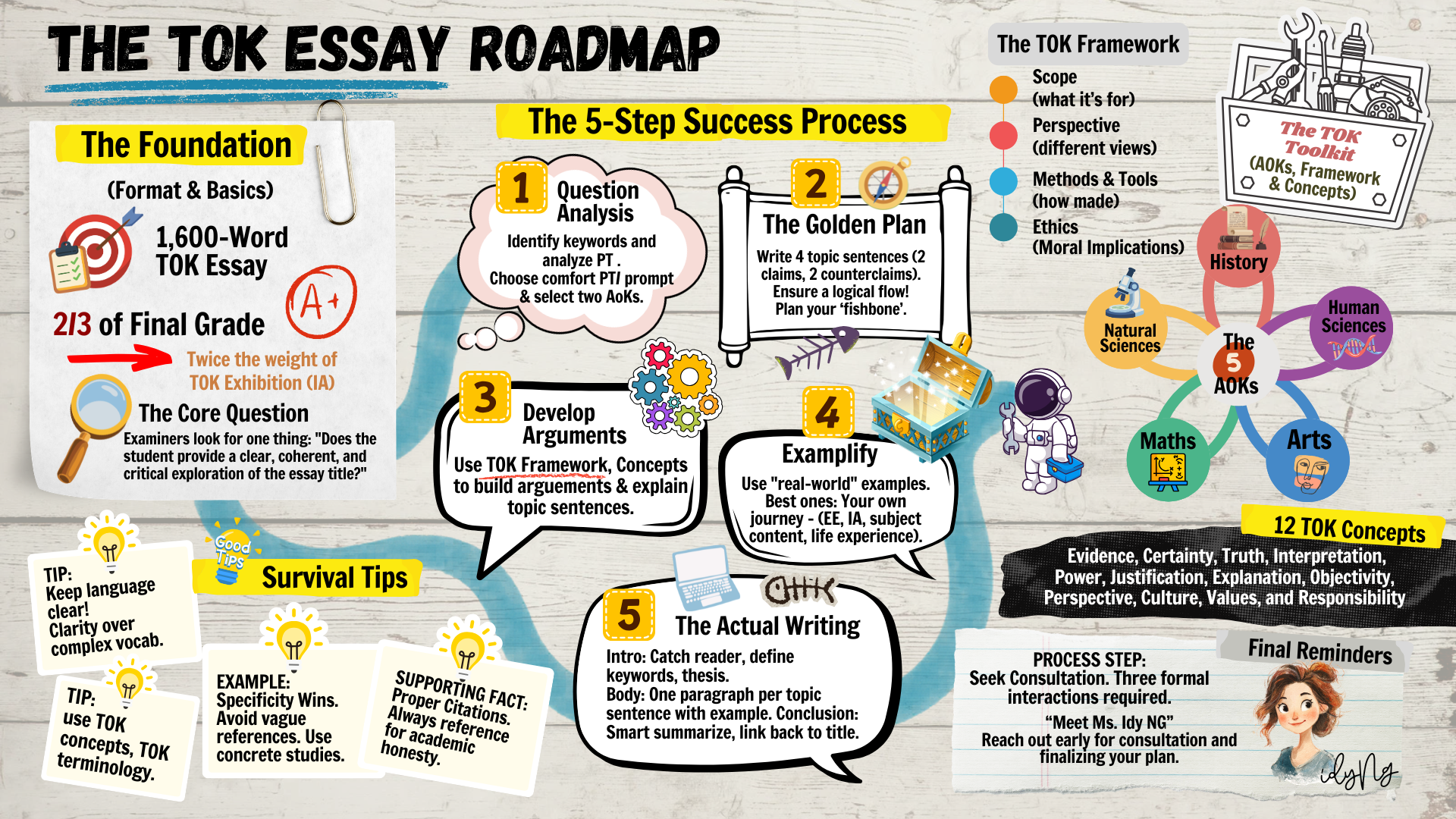
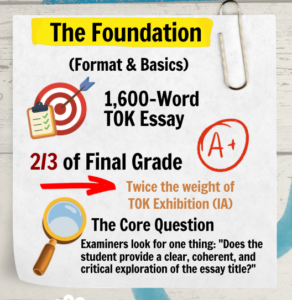
The Theory of Knowledge (TOK) essay can seem daunting, but it doesn’t have to be. As an external assessment that accounts for 67% of your final TOK grade, it requires you to write a maximum of 1,600 words answering one of six prescribed titles issued by the IB. To help you navigate this task, here is a clear roadmap to guide you from selecting your prompt to your final draft.
Step 1: Analyze the Question and Choose Your AOKs
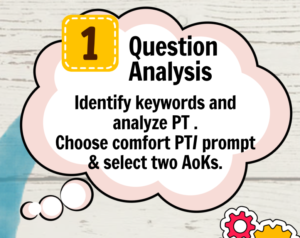
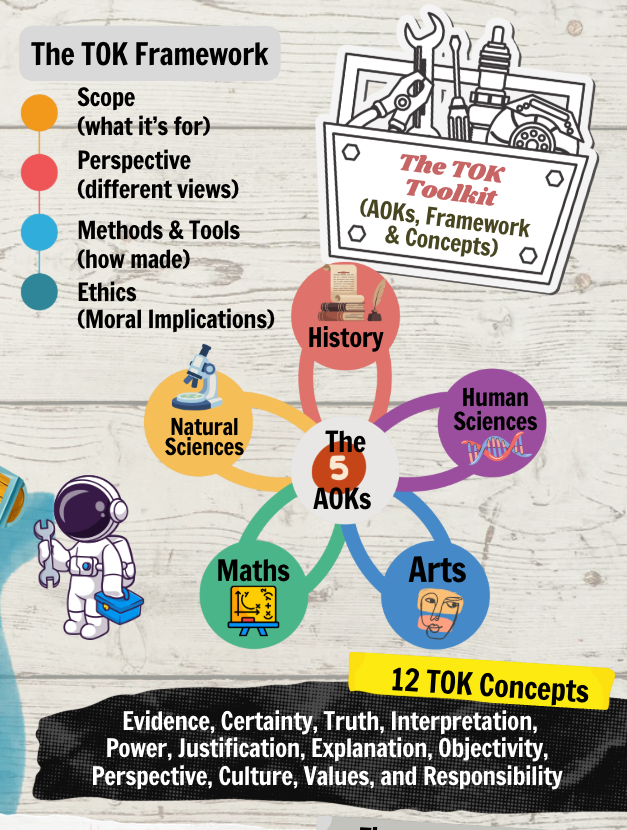
Begin by reviewing the six prescribed titles. Identify the keywords and define them within a TOK context to fully grasp what the examiner is asking. Choose the prompt you feel most comfortable with, and remember: you must use the chosen title exactly as given without altering it in any way. Modifying the title will result in lower scores, and if it bears no resemblance to the original prompt, you will be awarded a zero. Once selected, decide which Areas of Knowledge (AOKs)—such as the Natural Sciences, History, the Human Sciences, Mathematics, or the Arts—are most appropriate to answer your question.
Step 2: Plan Your Topic Sentences

Draft about four main statements that directly answer your chosen prompt. These statements will act as the topic sentences for your body paragraphs. Ensure that these statements include both claims and counterclaims to demonstrate the varied perspectives required by the marking scheme. Organize them so your essay flows logically; a common and effective approach is to systematically tackle claims and counterclaims by fully covering one AOK before moving on to the next.
Step 3: Develop Your Arguments
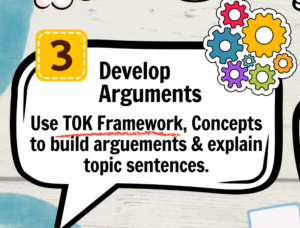
Build your case by expanding on your topic sentences using core TOK concepts like certainty, reliability, and bias. To effectively structure your analytical comparisons between AOKs, utilize the four elements of the Knowledge Framework: Scope, Perspectives, Methods and Tools, and Ethics. When formulating counterclaims, address weaknesses in previous arguments carefully so that you do not completely contradict or invalidate your earlier points.
Step 4: Find Strong Real-Life Examples
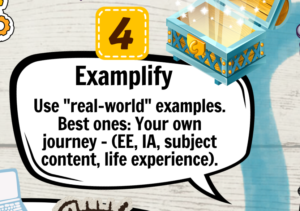
Before writing, gather well-researched, succinct examples to support each point. Avoid relying solely on abstract theories. Your examples should be easy for a first-time reader to understand. To save time and ensure you fully grasp the context, you can even draw on examples from your own IB journey, such as your Extended Essay, Internal Assessments, or other academic subjects.
Step 5: Write the Essay
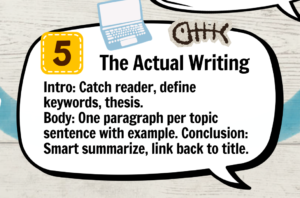
- Introduction: Use your question analysis to form a hook, define your keywords, and introduce your approach to the title.
- Body: Combine your topic sentences, TOK arguments, and concrete examples to form the core of the essay.
- Conclusion: Summarize your main points, offer final thoughts, and explicitly link back to the prescribed title and your introduction.
Step 6: Review, Format, and Consult Your Teacher
Keep your language simple and clear, focusing on answering the prompt directly rather than trying to impress the examiner with overly complex ideas. Stick strictly to the 1,600-word limit. Examiners are instructed to stop reading after this point and will apply a 1-point penalty if you exceed it. Ensure proper formatting, footnoting, and referencing according to IB stipulations.

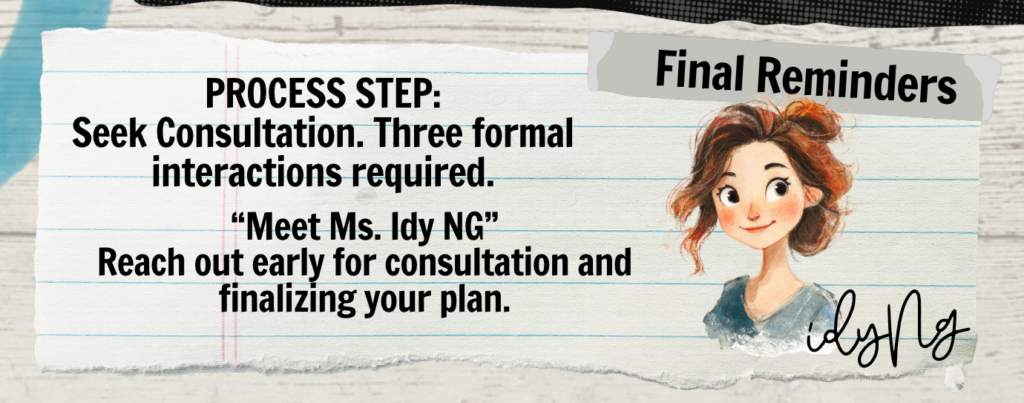
Finally, remember the rules regarding teacher feedback. You are required to have three formal recorded interactions with your teacher documented on the Planning and Progress Form (TK/PPF). Your teacher can look at your initial exploration and help you map out a paragraph-by-paragraph plan. You are also permitted to submit one full draft for your teacher to provide global written comments on, but they cannot edit or correct mistakes for you.
Start early so you have time to step away when you hit a wall, allowing you to refresh your brain and reconsider your ideas with a clear mind!
– by Ms Idy