A Playful AIP!
Published on idy.ng — by Ms Idy
With the IB Diploma Programme Visual Arts first assessment in 2027 placing art-making as inquiry at the centre of the course, many art educators are rethinking how studio tasks can naturally generate strong evidence for the new Art-Making Inquiries Portfolio (AIP).
What follows is one working approach that was used in an IBVA classroom—a two-phase project titled From Material Inquiry to Textural Landscape. This is not presented as a perfect model, but as a humble sharing of how material inquiry can be structured in ways that align with the AIP curriculum while keeping the studio experience open, experimental and personally meaningful for IBVA students.
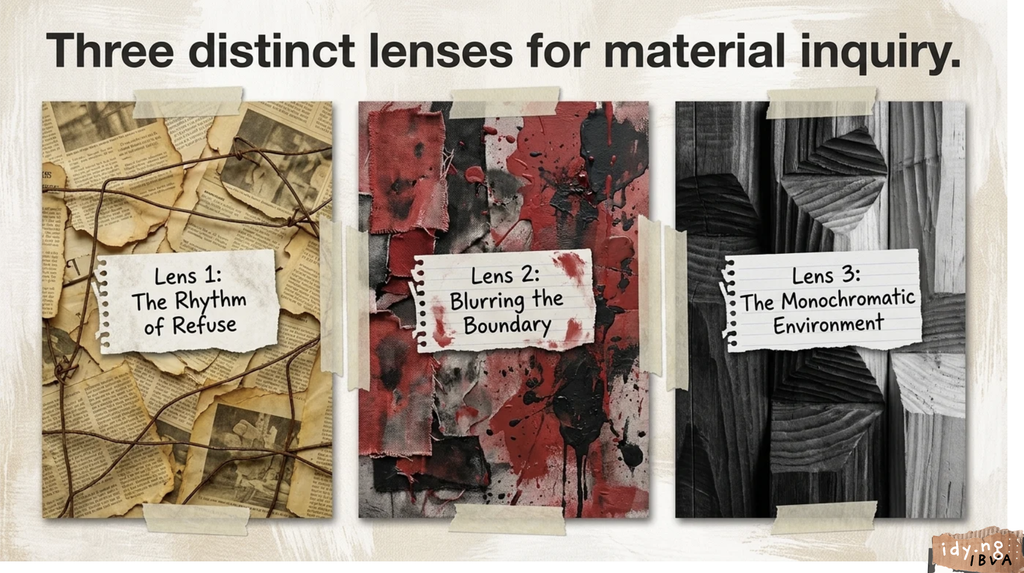
Intentions Behind the Unit
When planning this sequence, the main goals were to:
- Shift IBVA students away from starting with a fixed image or story, and instead begin with curiosity about materials.
- Create a task where exploration, technical decision-making and reflection are inseparable from making.
- Help IBVA students see that failures and revisions are valuable AIP evidence, not something to hide.
- Design a clear structure so IBVA students could curate their process into coherent AIP screens rather than submitting a random archive of photos.
- Support both SL and HL IBVA students in developing personal lines of inquiry that could extend beyond a single task.
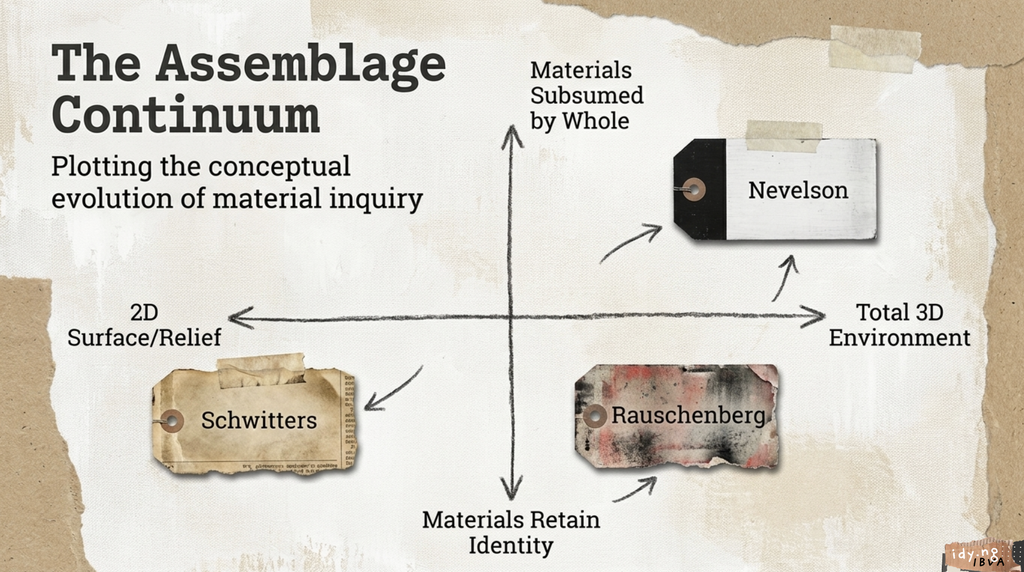
Framing Inquiry for IBVA Students
At the start of the unit, IBVA students were invited to consider: “We are not starting with ‘What will my final artwork look like?’ We are starting with ‘What can these materials do, and what questions do they raise?'”
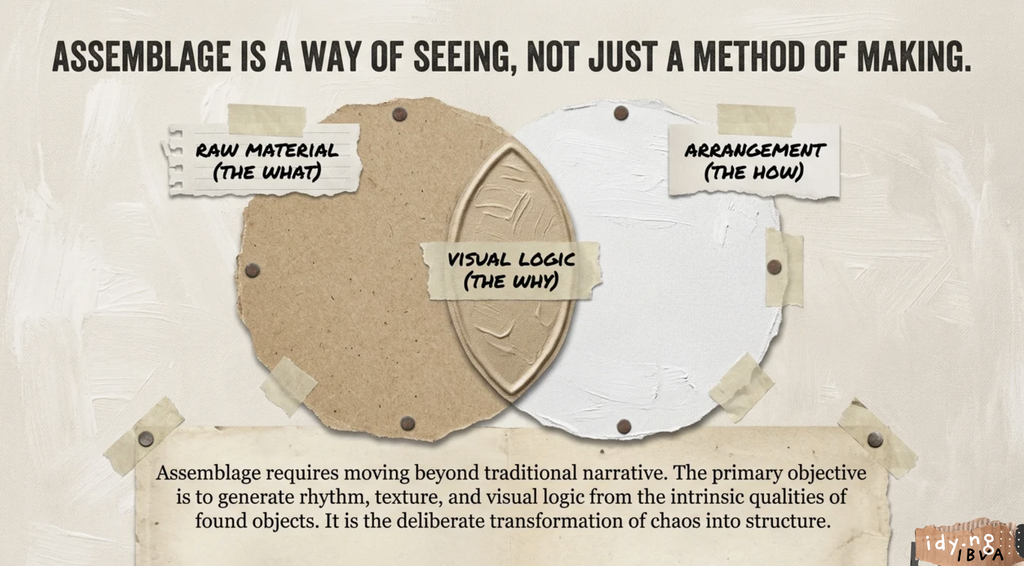
Everyday and found materials were introduced—wire, cupcake paper, sponge, thread, plastic wrap, fabric scraps, packaging, cardboard—and IBVA students were asked to investigate properties such as:
- Flexibility and resistance
- Transparency and opacity
- Absorbency and surface texture
- Weight, fragility and structural potential
Rather than demonstrating a “correct” outcome, neutral and specific observation was modelled: “This sponge compresses and rebounds”; “This plastic wrap creates glossy folds”; “This wire holds a directional line but buckles under pressure.”
Every test—successful or not—was treated as data for the AIP.
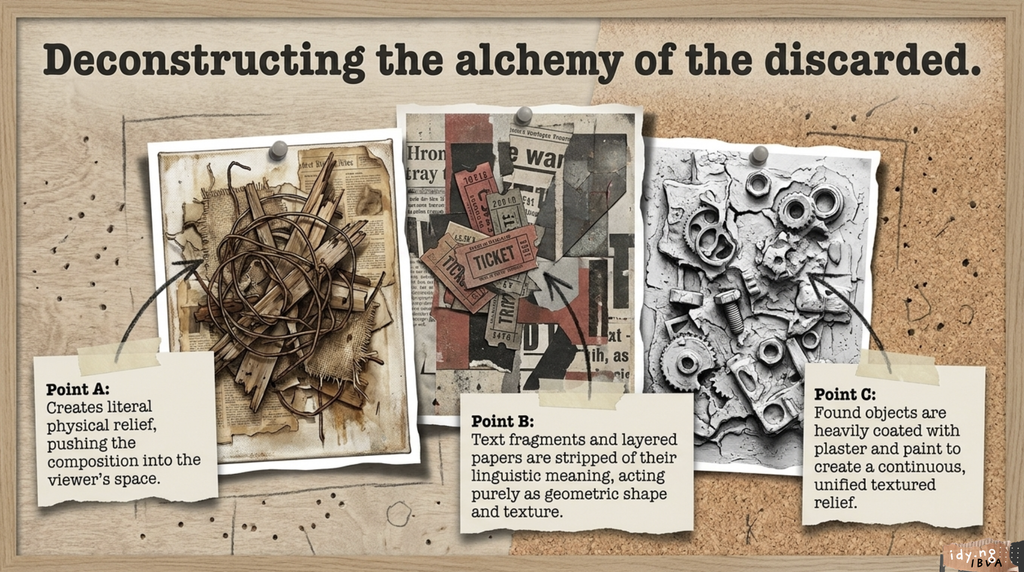
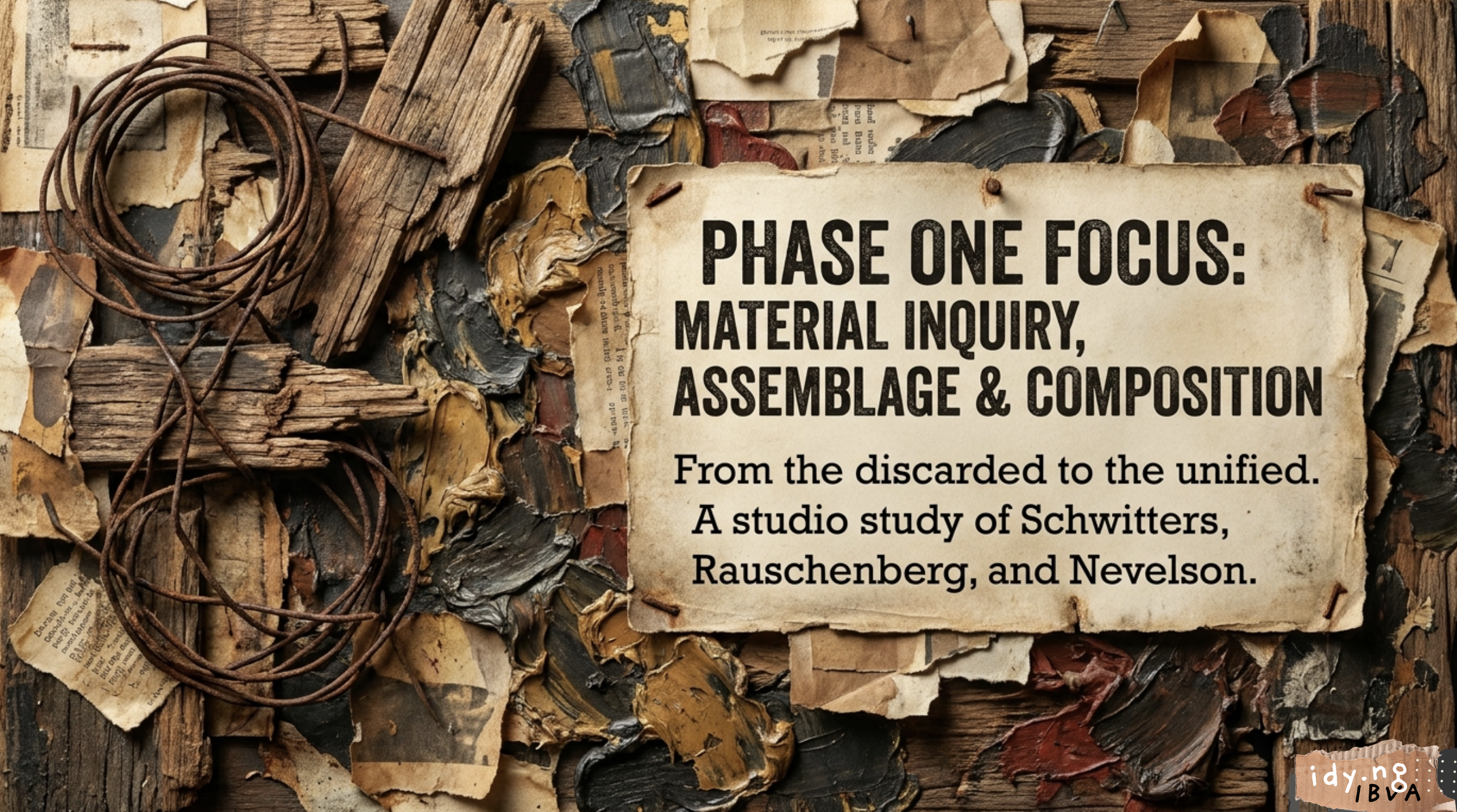
Phase One: Material Inquiry and Compositional Logic
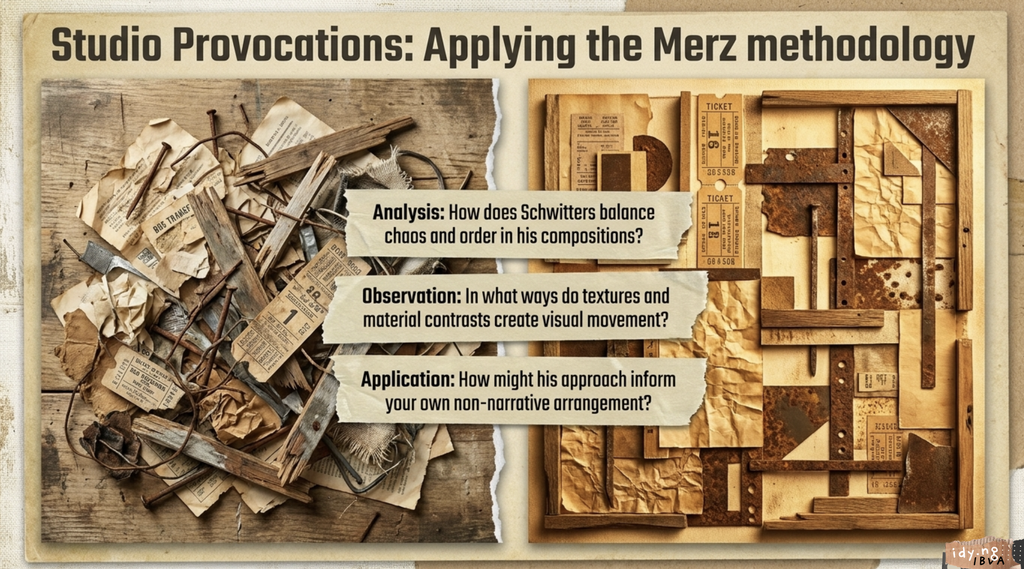
Task Structure
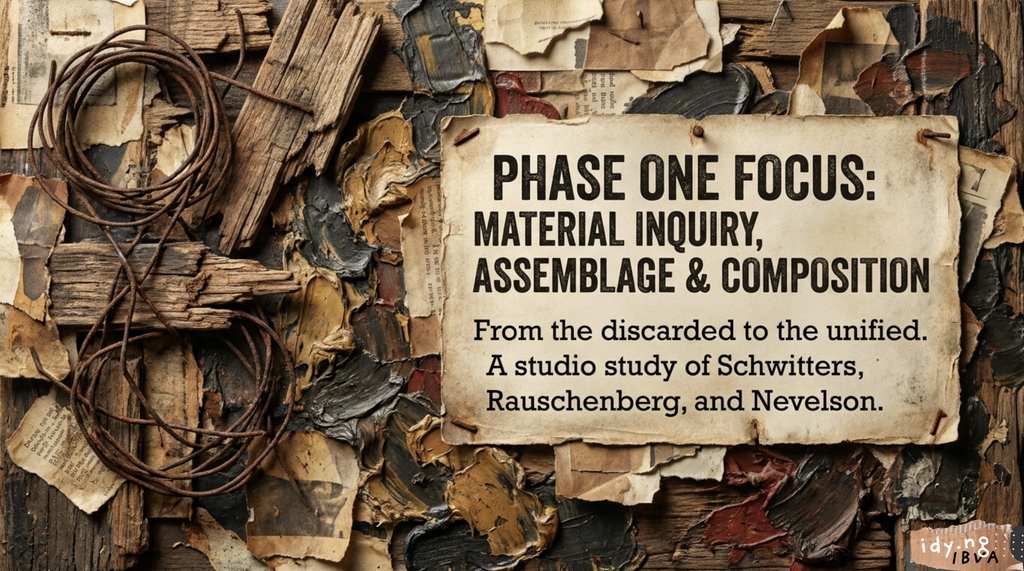
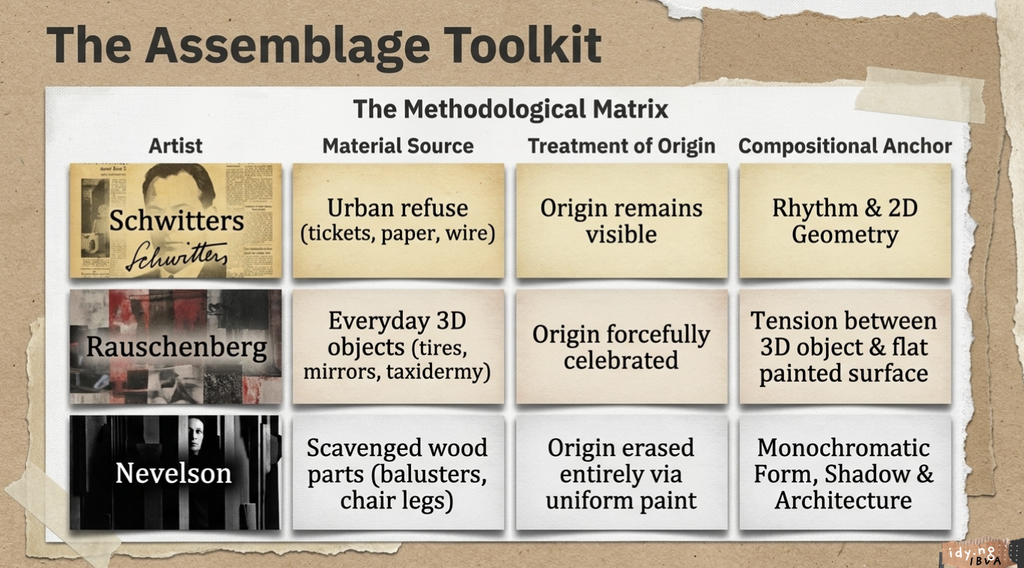
In Phase One, IBVA students created a non-narrative mixed-media relief composition on a large canvas.
Key constraints:
- Original colours and material identities remained visible.
- No story, character or literal scene at this stage.
- Materials and adhesives were tested before permanent attachment.
- Focus was placed on material behaviour, secure construction and intentional composition.
Lessons were structured around:
- Material manipulation tests: folding, bending, stretching, compressing, layering, wrapping, weaving.
- Fixing-method trials: white glue, hot glue, stitching, stapling, tying, tension-based methods.
- Compositional alternatives: at least two thumbnail plans or temporary layouts before final attachment.
- Documentation: process photographs, close-ups of joins, annotated reflections.
Alignment to AIP Criteria
Throughout Phase One, the four AIP criteria were kept visible:
- Criterion A (Exploration and experimentation)
IBVA students were required to show a range of material tests, manipulation trials and alternative compositions. “Failed” tests were explicitly included in the AIP with short annotations about what was learned. - Criterion B (Practical investigation)
During critiques, questions such as “Why this adhesive for this material?” and “How does your fixing method respond to the material’s properties?” encouraged IBVA students to justify technical choices rather than simply describe them. - Criterion C (Lines of inquiry)
Each IBVA student formulated at least one evolving inquiry question, for example:- “How can repetition of a fragile material create visual strength?”
- “What happens to my composition when I prioritise negative space over accumulation?”
These questions were revisited mid-phase and at the end of Phase One.
- Criterion D (Critical review)
Phase One presentations were structured into three short sessions:- Material Encounter – discoveries and surprises
- Attachment and Construction – technical decisions and problem-solving
- Compositional Logic – visual system and intentionality
This helped IBVA students move from “I did this” to “I chose this because… and next I will…”
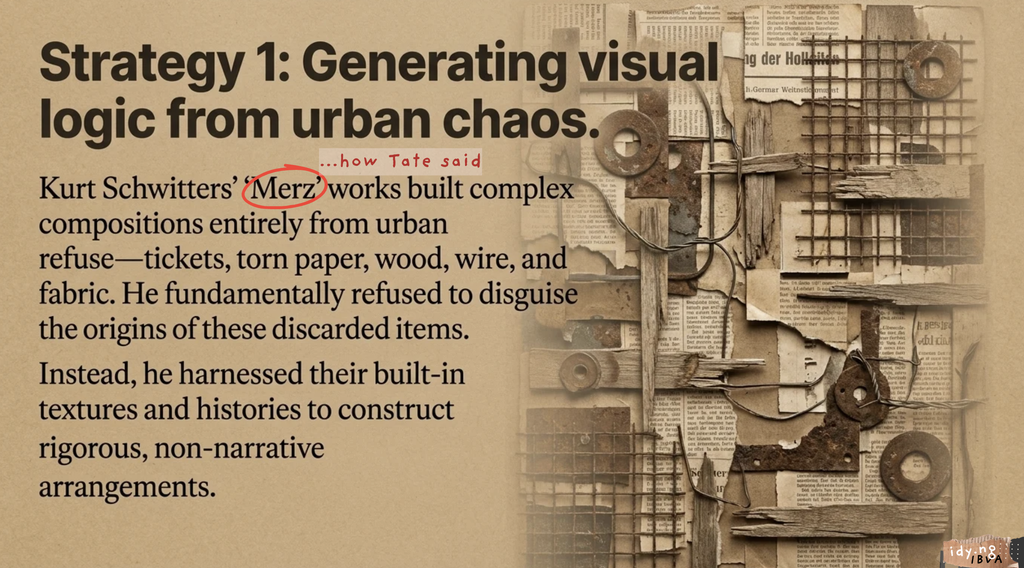
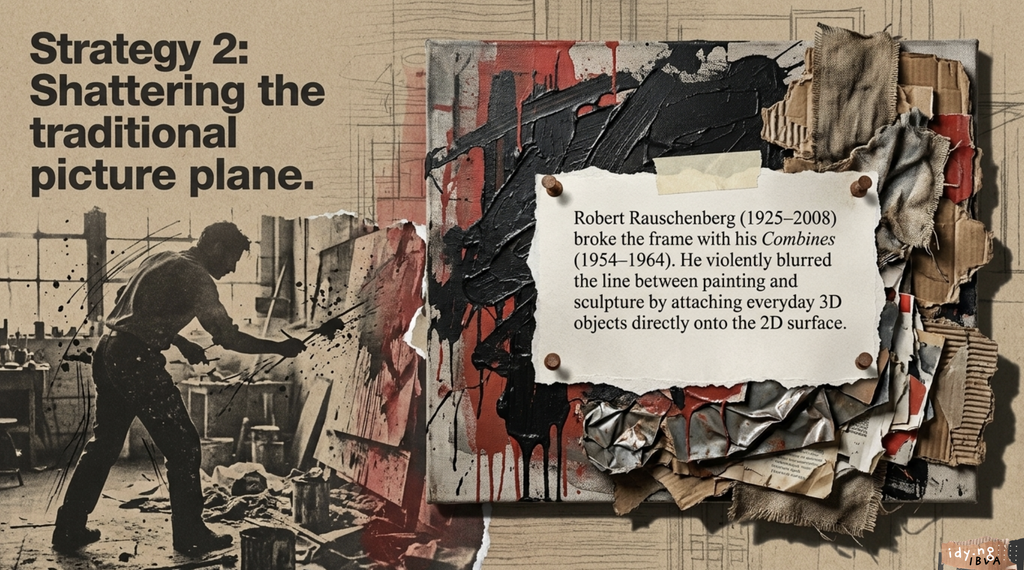
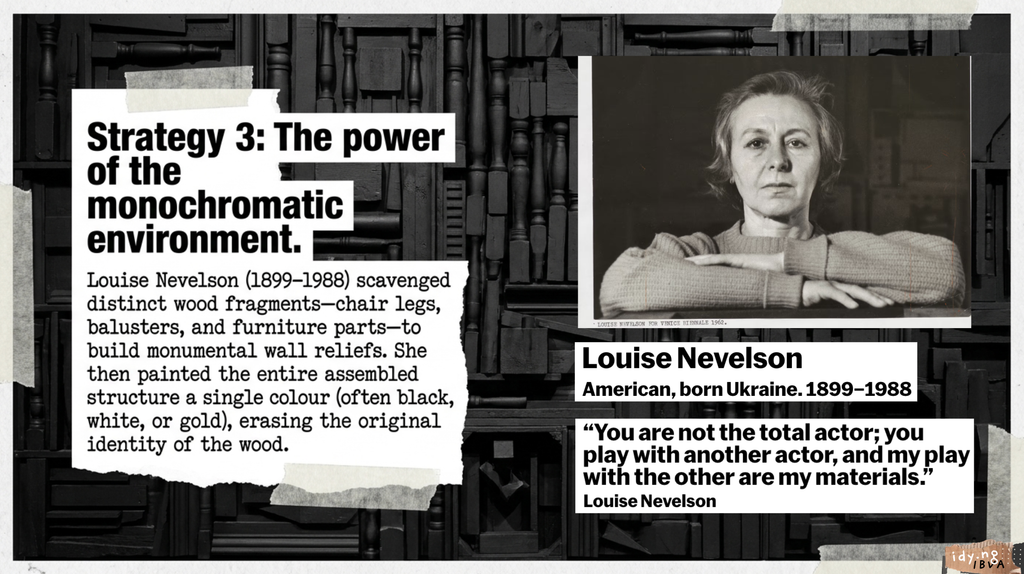
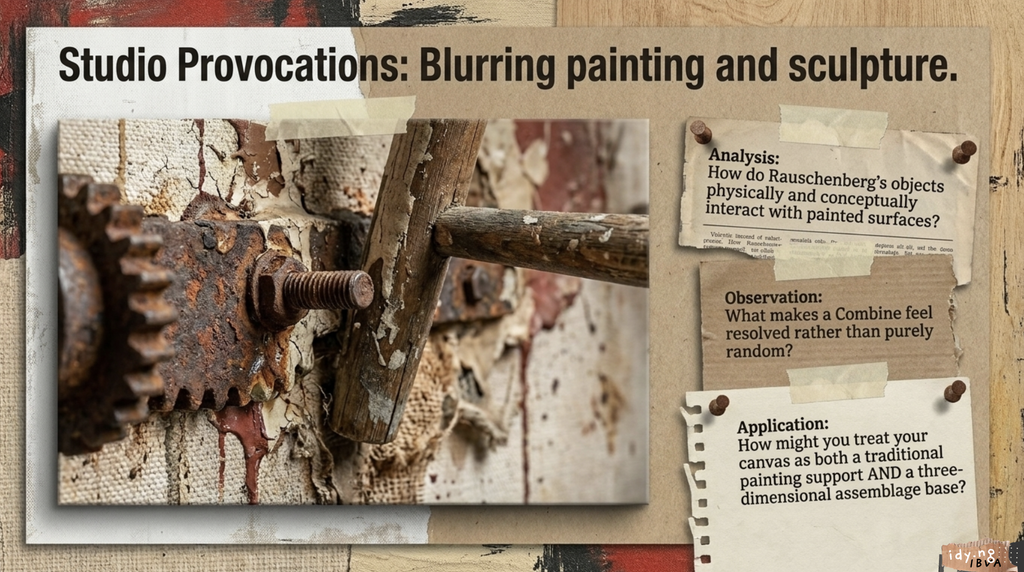
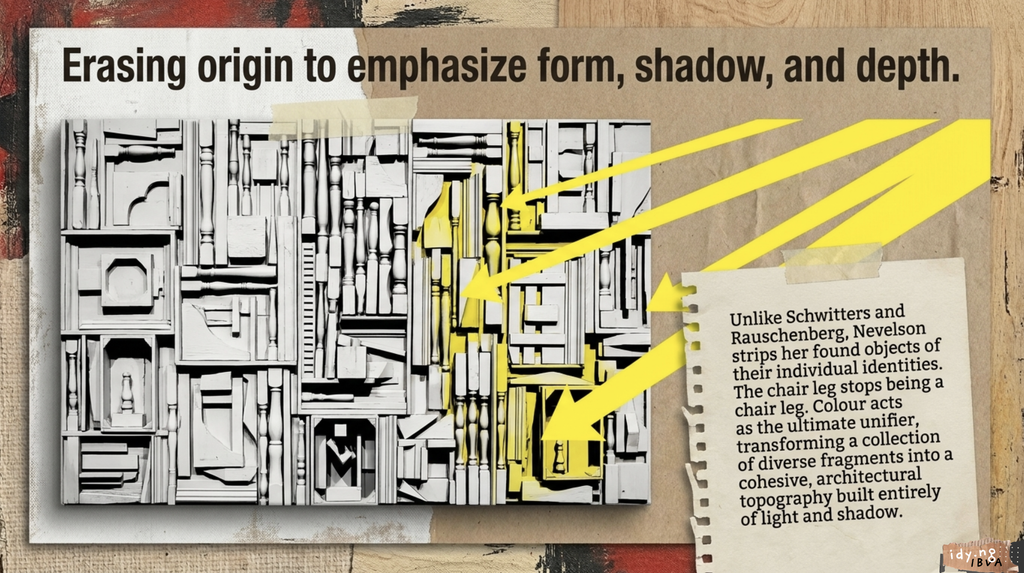
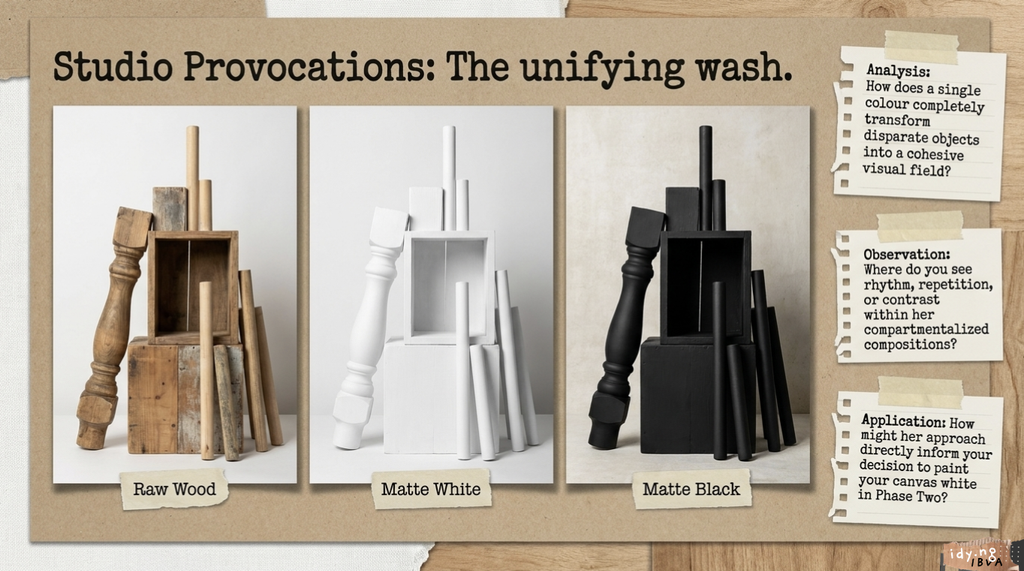
For colleagues teaching IBVA under the 2027 syllabus, the hope is that this structure might offer a starting point for adaptation. How might material inquiry be framed in your own context? What tensions arise between open inquiry and assessment requirements in your studio?
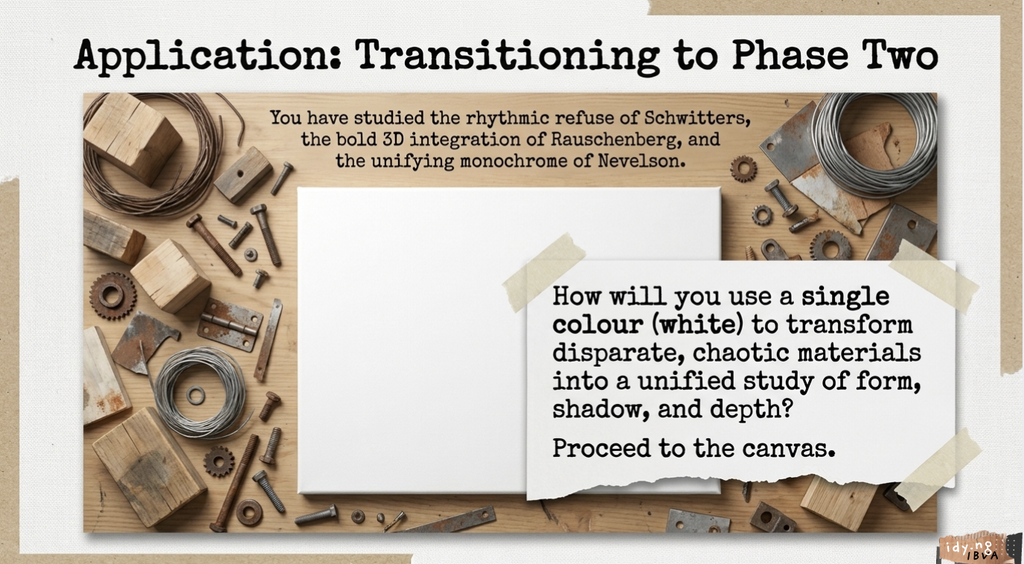
This classroom approach was developed and implemented in IB Diploma Programme Visual Arts classes. For more resources, classroom documents and AIP-aligned worksheets, visit idy.ng.
Video credit: YouTube video used for educational purposes in this IBVA teaching sequence.