A Playful AIP!
Published on idy.ng — by Ms Idy
Phase Two: White Ground and Textural Landscape
Task Structure
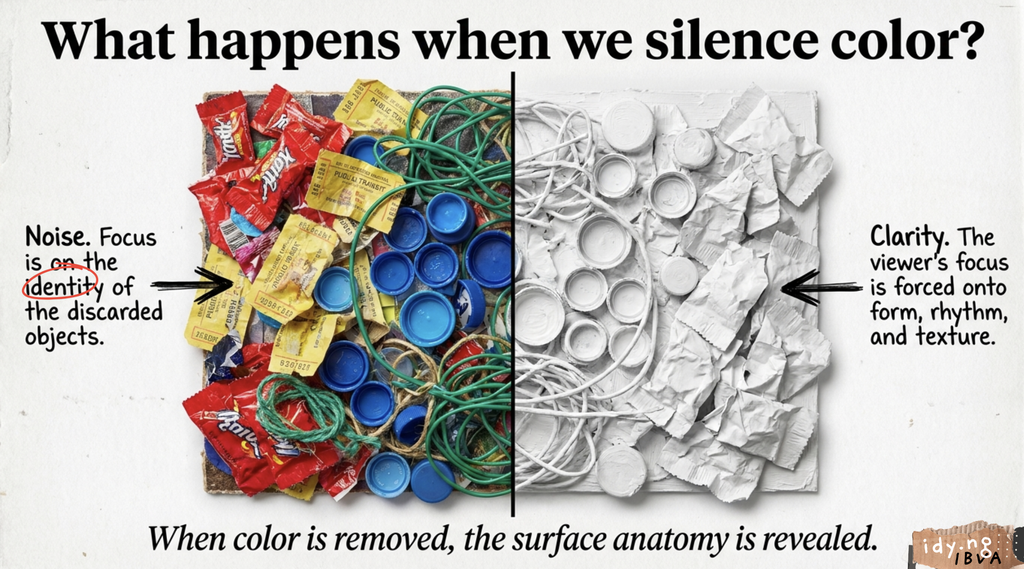
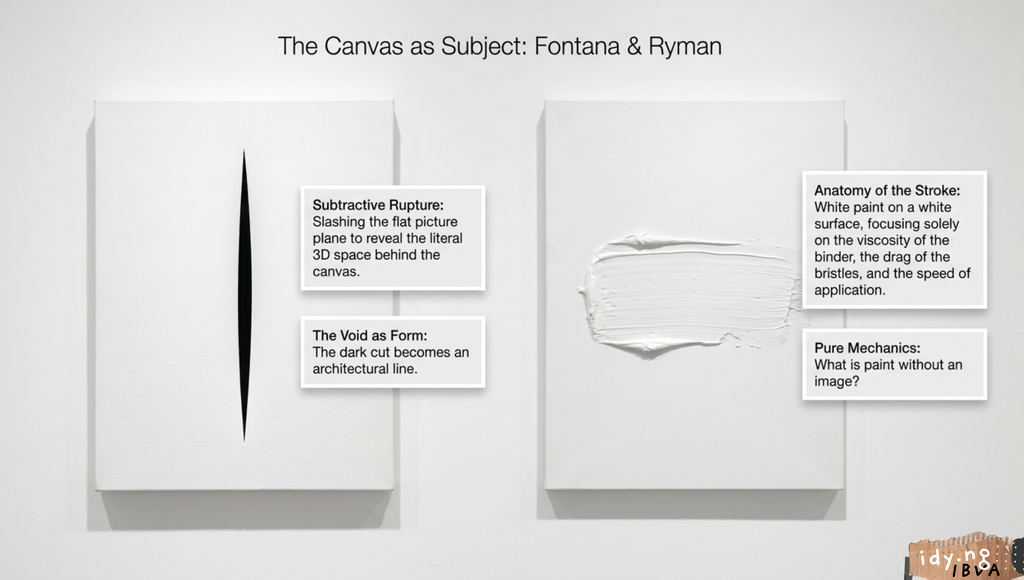
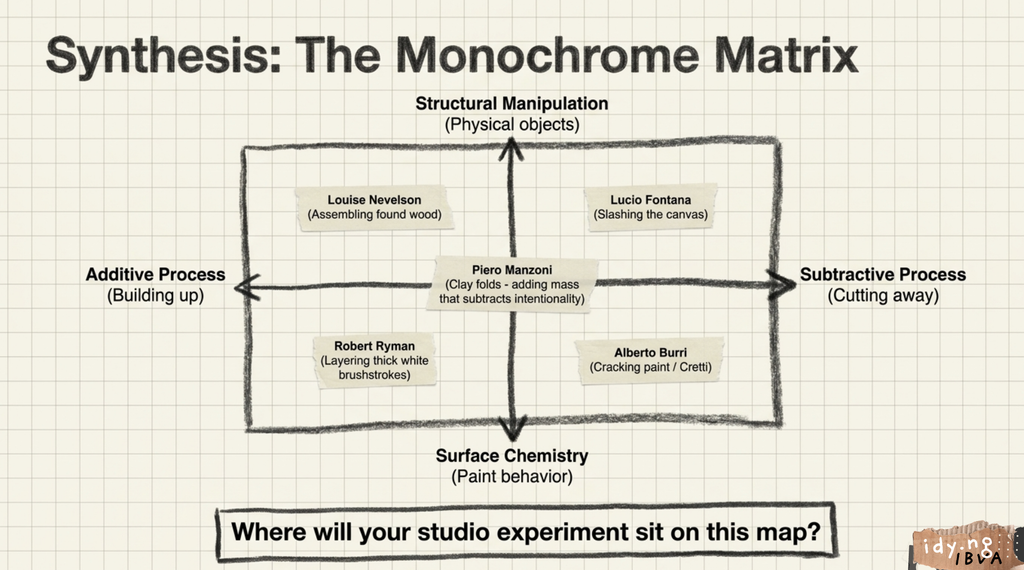
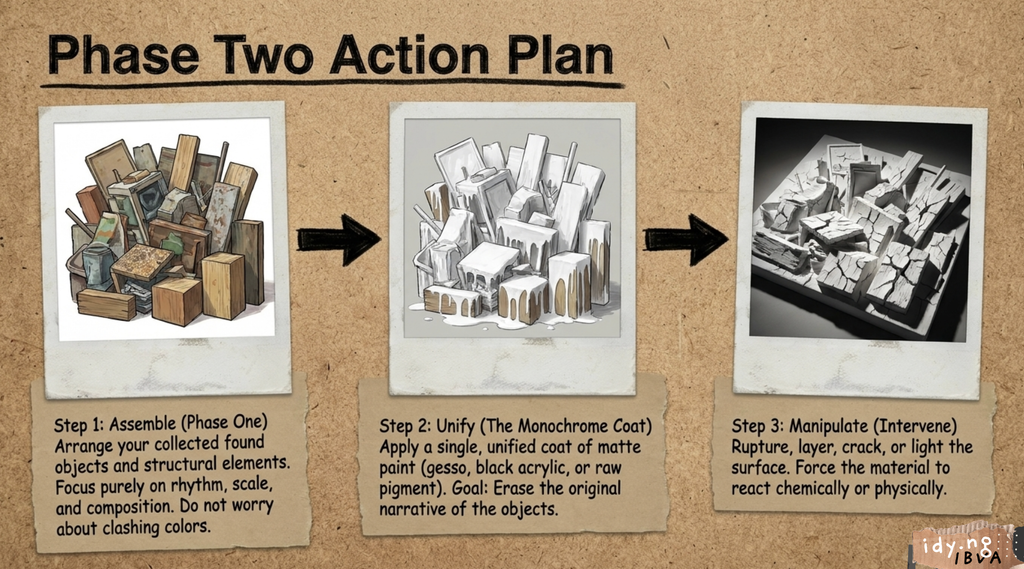
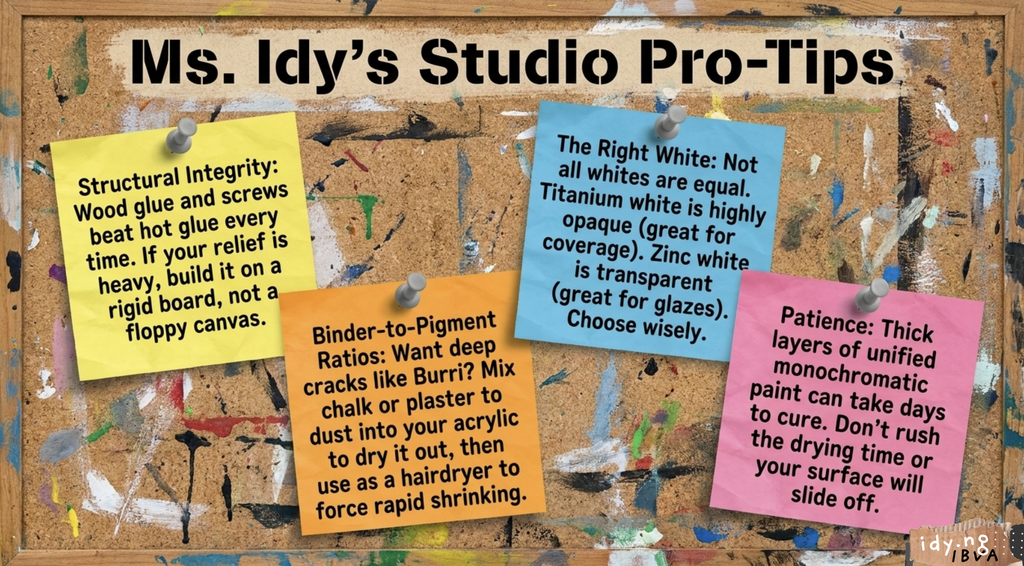
In Phase Two, IBVA students painted their entire Phase One canvas and attached materials white (using gesso or acrylic).
This step was framed not as “finishing” the work, but as shifting perception:
- Local colour is removed.
- Diverse materials become visually unified.
- Texture, relief, shadow, form, line and depth become the primary information.
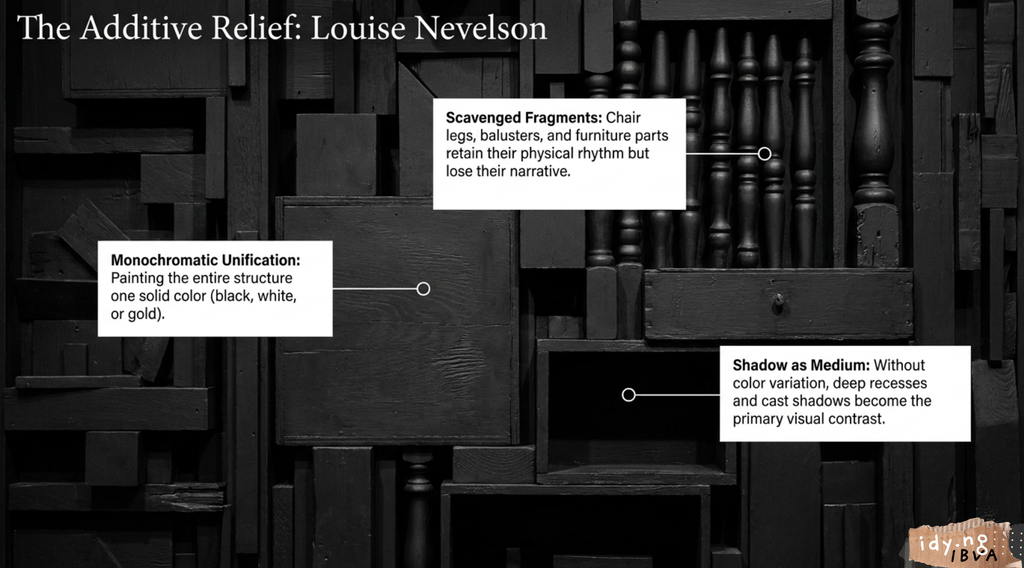
IBVA students then observed the white relief carefully and allowed textures, ridges, cavities and shadows to suggest a landscape, atmosphere, place or imagined environment. They drew and painted directly onto the textured relief, developing an image that grew from the physical structure built in Phase One.
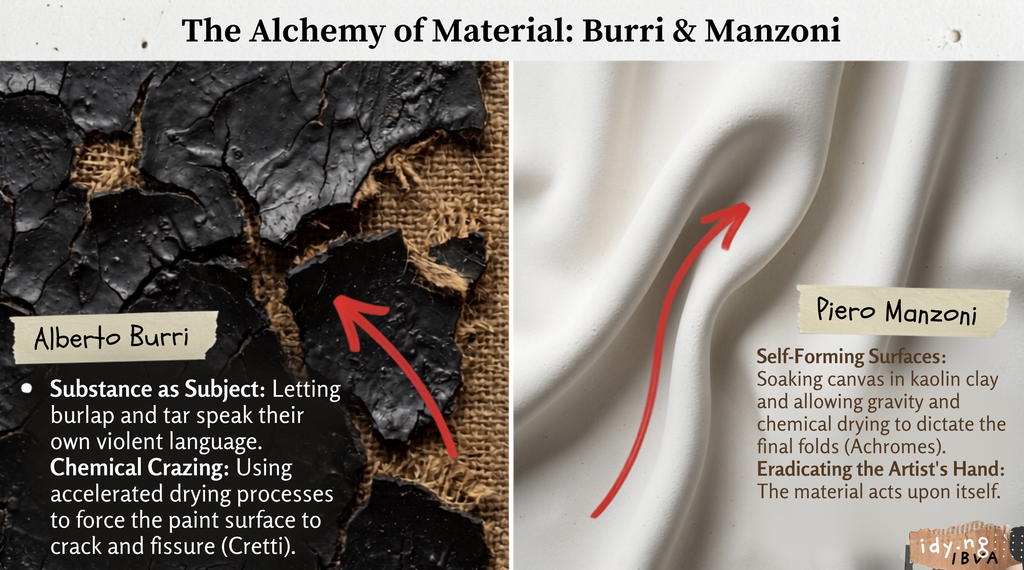
Support was offered through:
- Monochrome transformation: photographing the white relief under directional light.
- Texture observation: making detailed drawings of selected areas and identifying landscape possibilities.
- Landscape development: creating at least two sketch proposals and clarifying artistic intention (mood, memory, place, concern, imagined world).
- Painting and review: testing paint processes (dry brush, wash, glazing, scumbling, staining) and evaluating how texture and image interact.
Alignment to AIP Criteria
- Criterion A
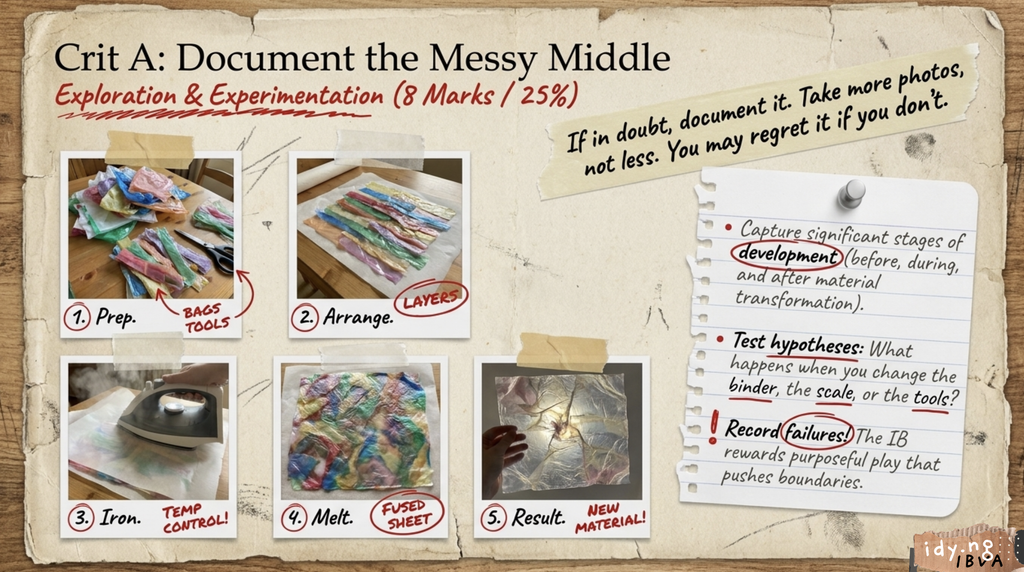
IBVA students tested different paint responses to relief and documented which techniques enhanced or obscured texture. Small test strips were encouraged in the AIP before committing to the full canvas. - Criterion B
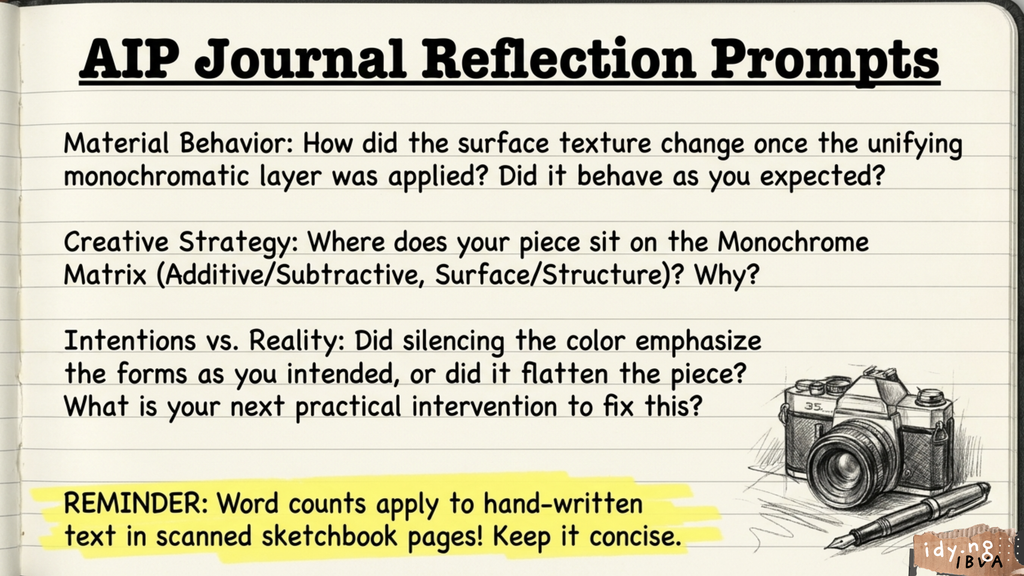
During studio time, questions such as “Where are you preserving texture, and why?” and “How does your paint handling respond to the relief rather than sitting on top of it?” helped IBVA students make controlled, justified decisions. - Criterion C
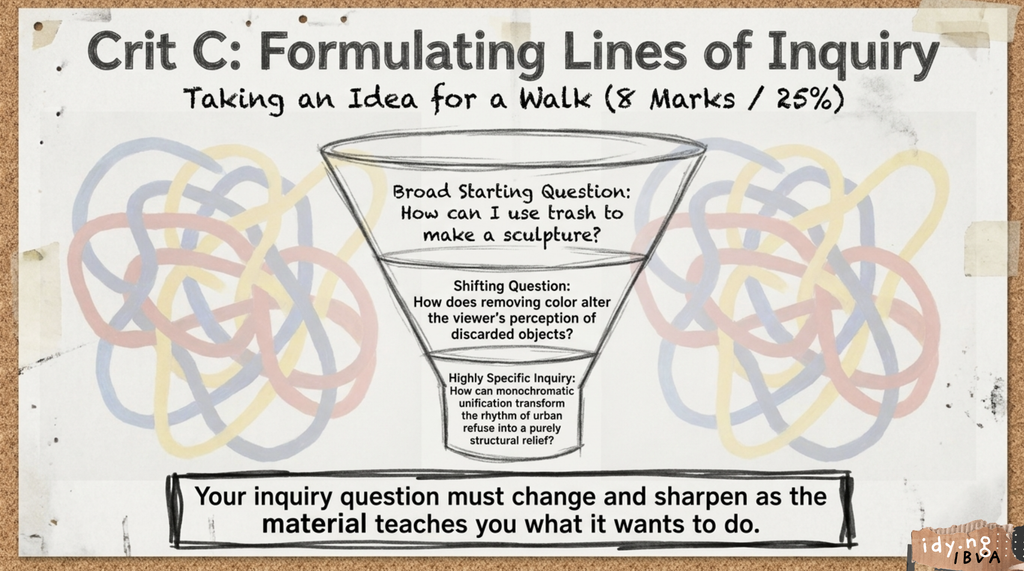
Each IBVA student articulated how their white-ground observations developed into a coherent landscape inquiry with personal meaning. Emerging inquiry questions included:- “How can texture suggest erosion, memory or time?”
- “What kind of environment does my relief imply—hostile, sheltering, industrial, organic?”
- “How does scale change whether my texture reads as abstract form or landscape?”
- Criterion D
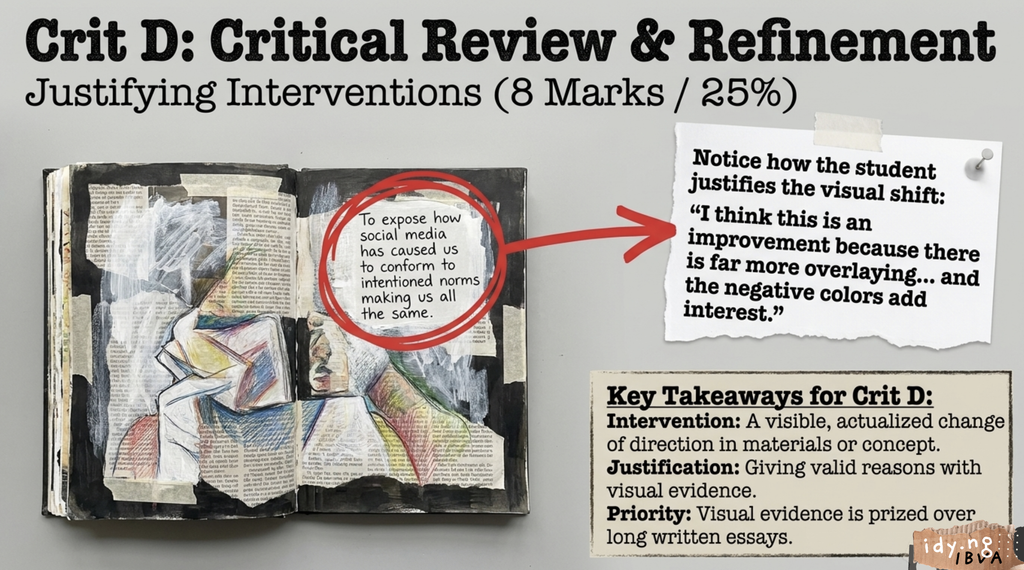
For the final presentation, IBVA students addressed:- How painting the canvas white changed their perception of the original materials.
- Which textures and forms became significant once colour was removed.
- What landscape or environment emerged from the white relief and why it mattered to them.
- Which painting processes responded most effectively to the surface and how they revised their approach.
- What their final work revealed about their developing visual language and what might be investigated next.
This structure helped produce AIP screens that were reflective and forward-looking, not merely descriptive.
Supporting Different IBVA Students
To balance structure with openness, several approaches were used:
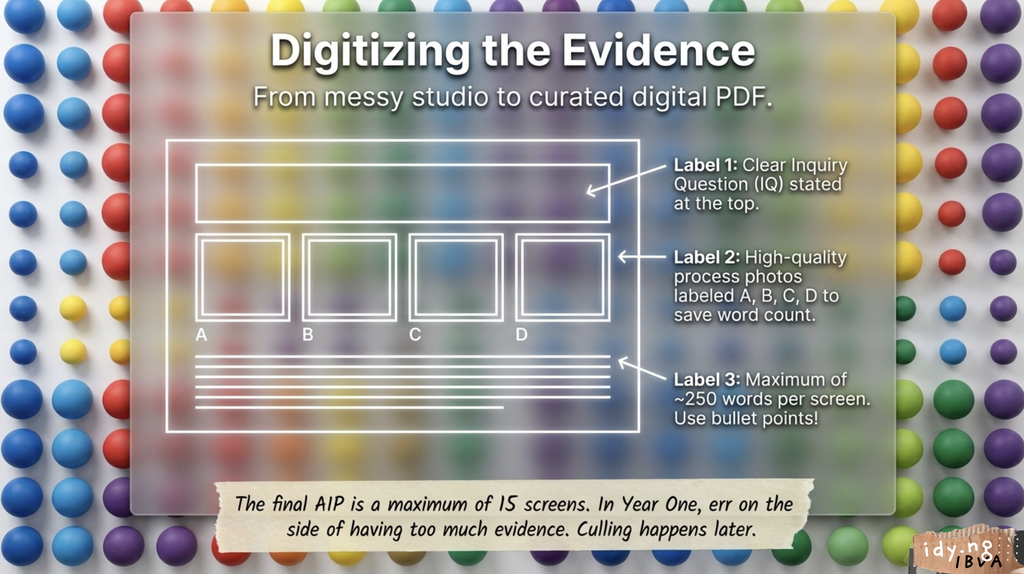
- For IBVA students who felt overwhelmed, limited material palettes, sentence starters for annotations and a required slide template with headings (What I tested; What I discovered; What I changed; What I will try next) were offered.
- For more confident IBVA students, stricter self-imposed rules were encouraged (e.g. “I will use only one fixing method” or “I will create a mathematical sequence in my composition”) along with a challenge to produce two contrasting landscape interpretations of the same white relief.
Brief individual conferences helped IBVA students convert descriptions into genuine inquiry questions.
Observations from the Classroom
After implementing this unit, several patterns emerged:
- IBVA students who embraced the inquiry framing produced AIP screens that felt coherent and purposeful, even when their final images differed significantly from one another.
- The three-session presentation structure for Phase One helped IBVA students curate rather than dump images into their portfolio.
- IBVA students who initially saw “failures” as embarrassing began to include them as evidence of learning, which strengthened their Criterion D responses.
- The white-ground step was particularly effective in helping IBVA students see texture as content, not just surface decoration.
Why Share This Approach?
Many art educators are navigating how to translate the new AIP expectations into everyday classroom practice. This unit is offered not as a finished model, but as one working approach that helped IBVA students:
- Engage authentically with materials.
- Make intentional technical and compositional decisions.
- Develop personal lines of inquiry.
- Document and reflect in ways that align naturally with the AIP criteria.
For colleagues teaching IBVA under the 2027 syllabus, the hope is that this structure might offer a starting point for adaptation. How might material inquiry be framed in your own context? What tensions arise between open inquiry and assessment requirements in your studio?
-Idy NG